

Performance by Category
numpy-ts outperforms NumPy in most categories. NumPy leads in bitwise, trig, and math — all active areas of improvement.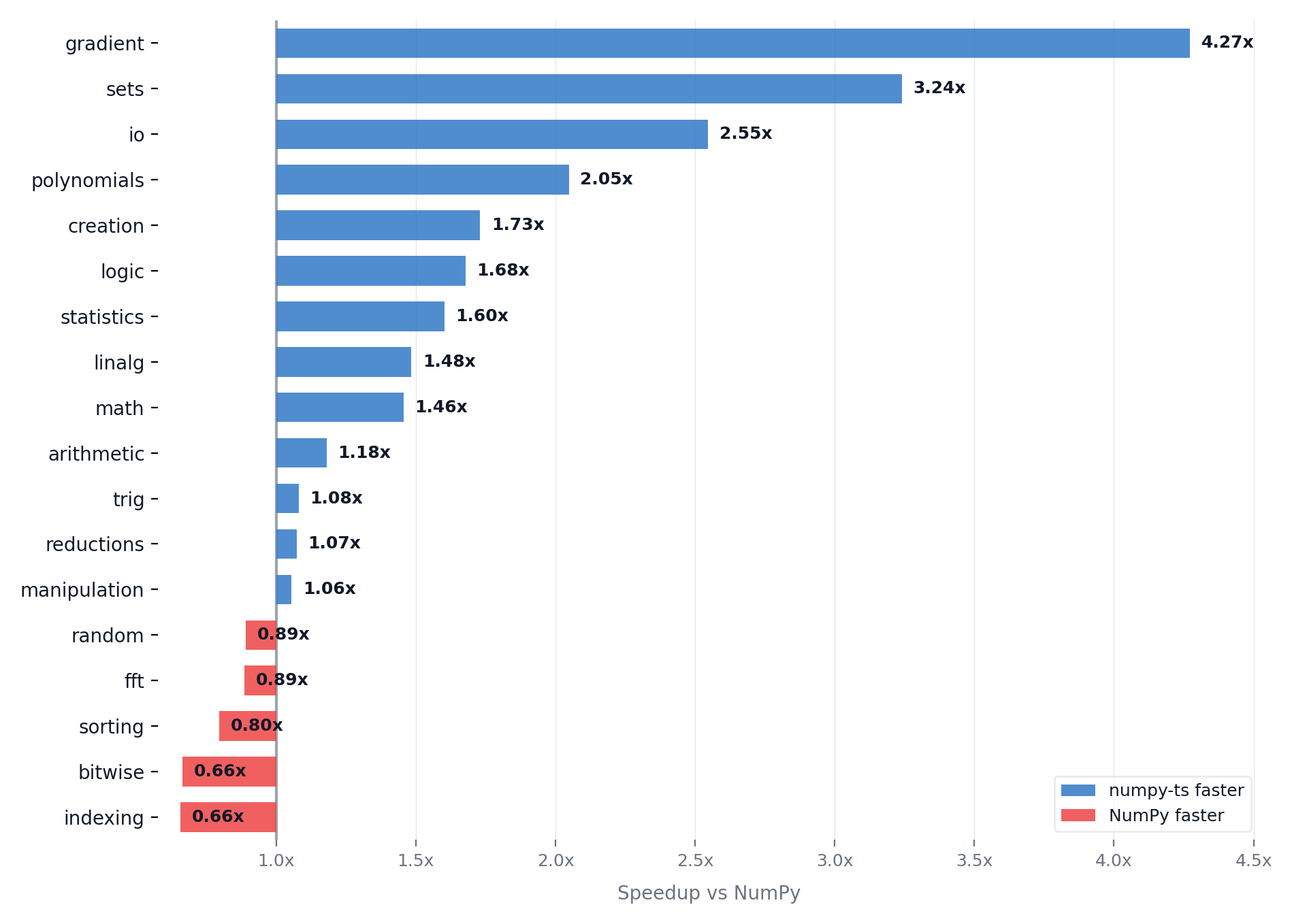
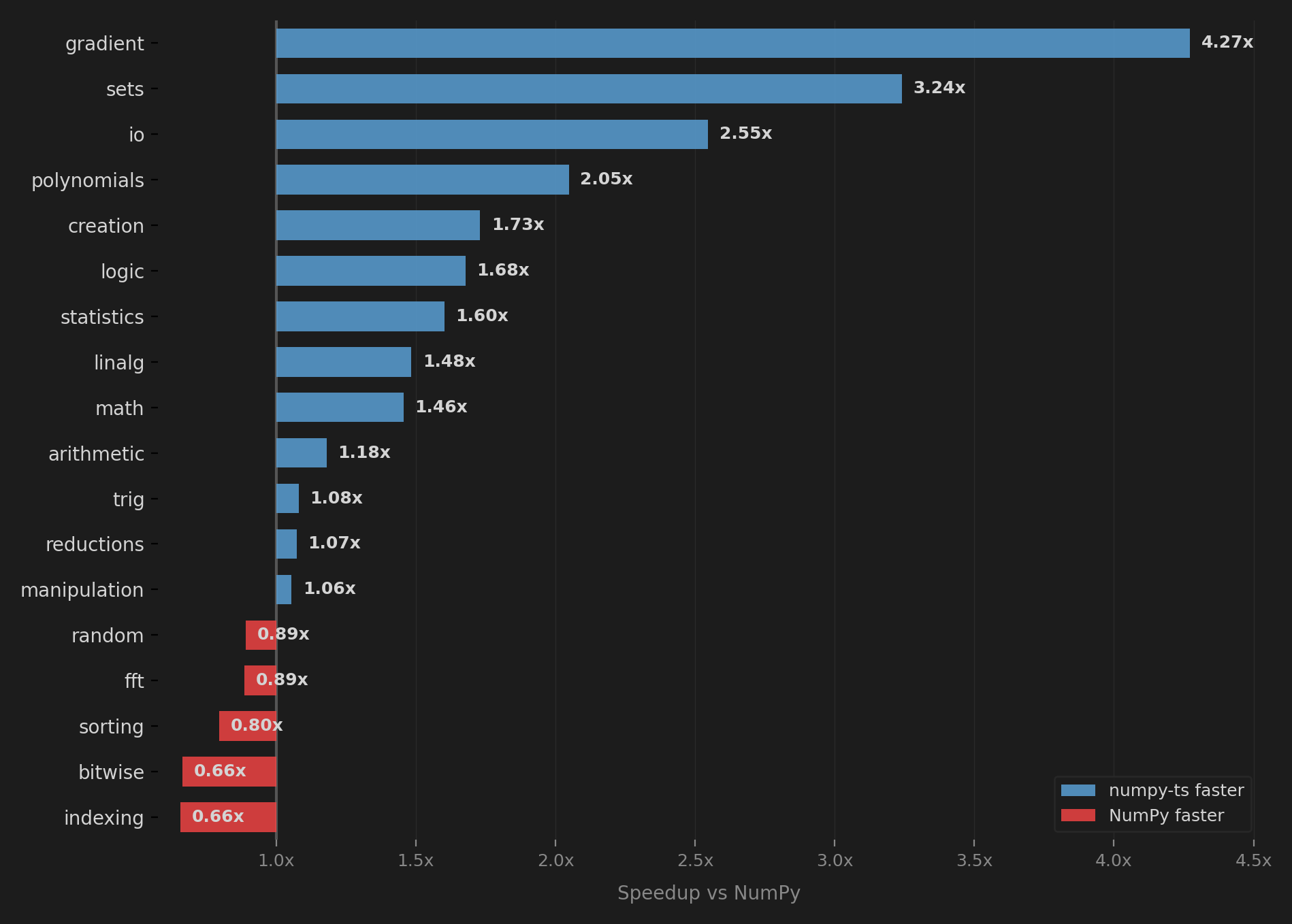
See the full breakdown of category results on the numpy-ts vs. NumPy page.
Performance by Data Type
Smaller data types see the biggest gains — numpy-ts’s SIMD kernels process more elements per instruction forint8, uint8, and float16. Even float64 (NumPy’s home turf) is on par.
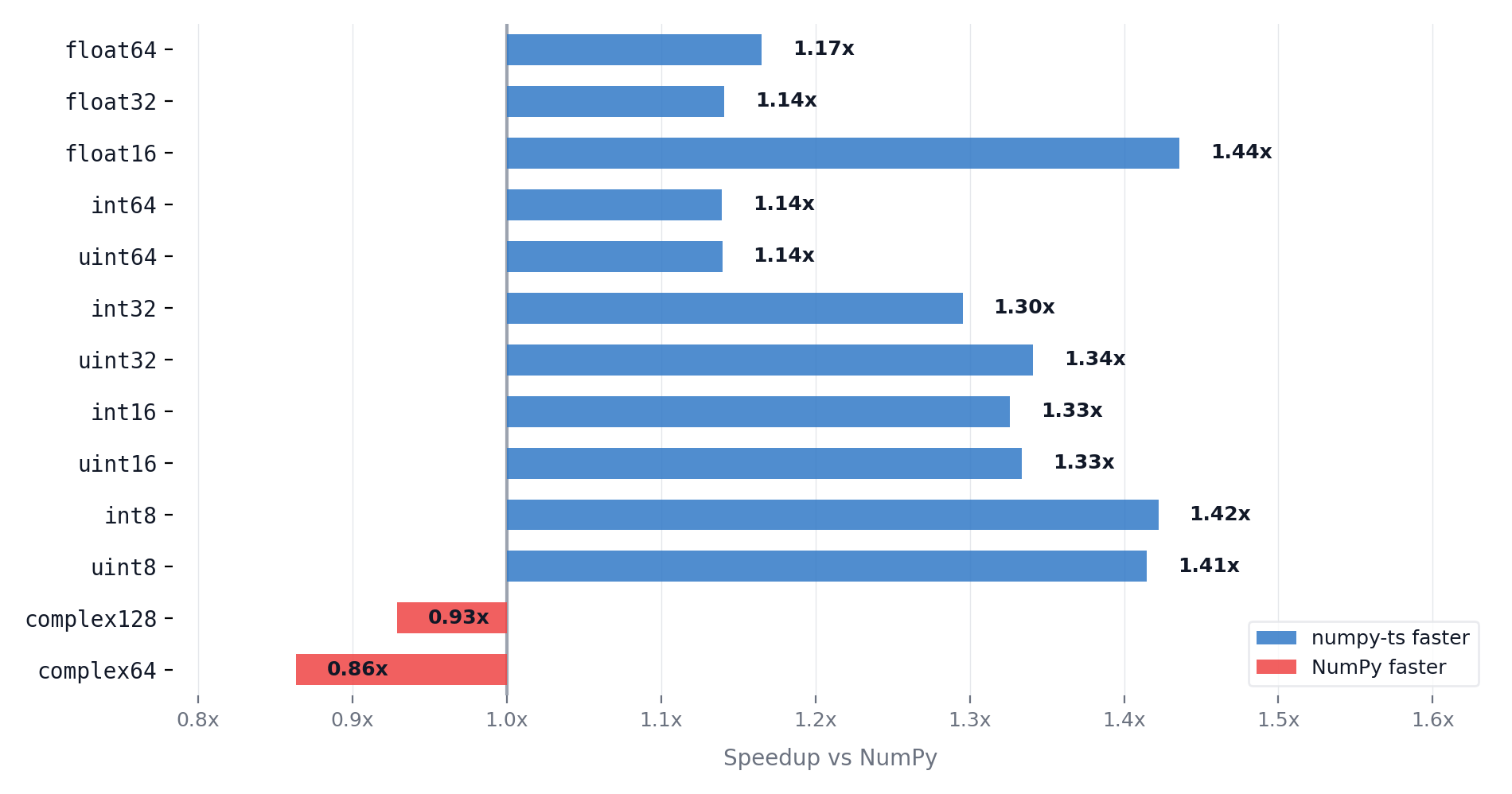
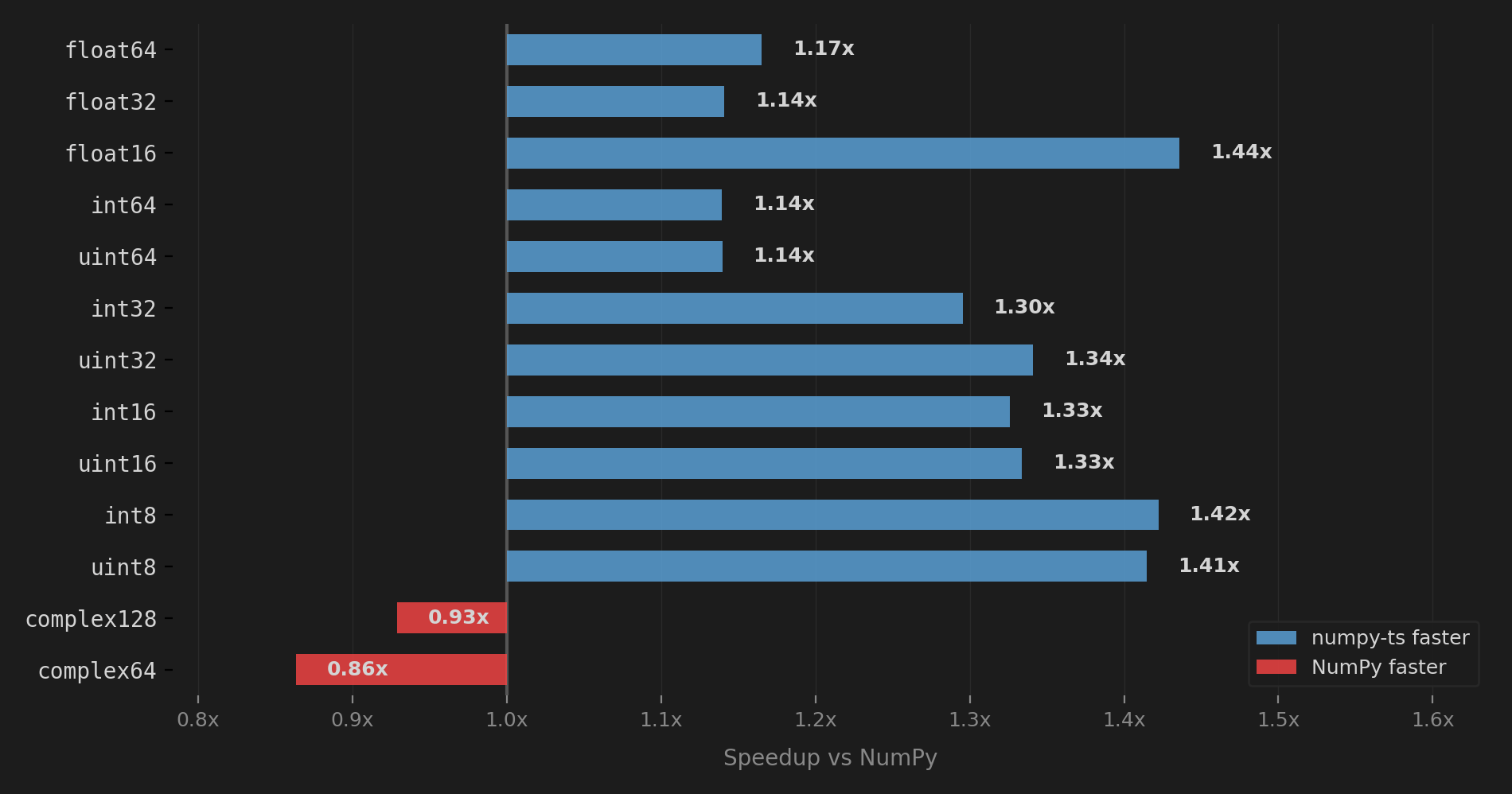
See the full breakdown of dtype results on the numpy-ts vs. NumPy page.
Performance by Array Size
numpy-ts is as fast or faster than NumPy at every tested array scale — from small (100-element) arrays where low overhead matters, to large (10K-element) arrays where SIMD throughput dominates.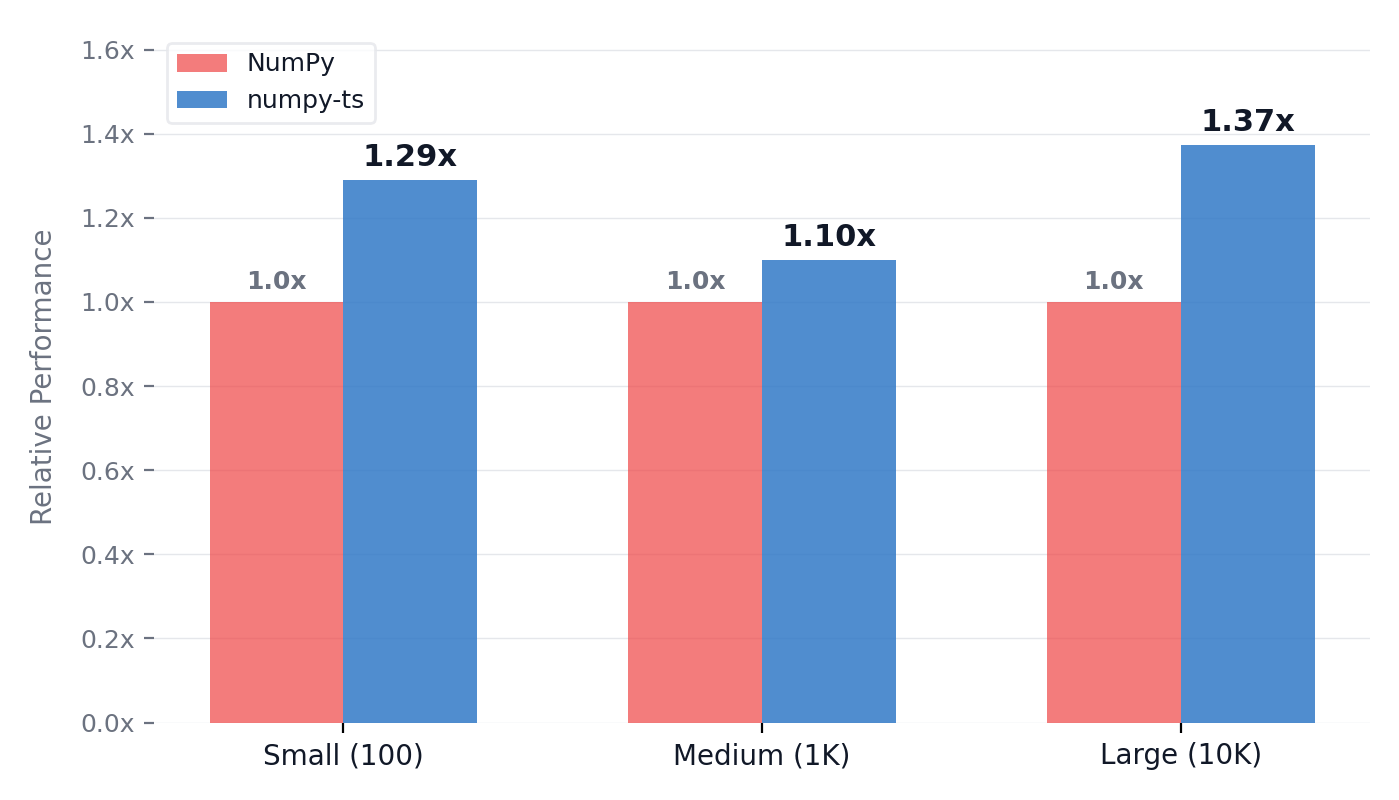
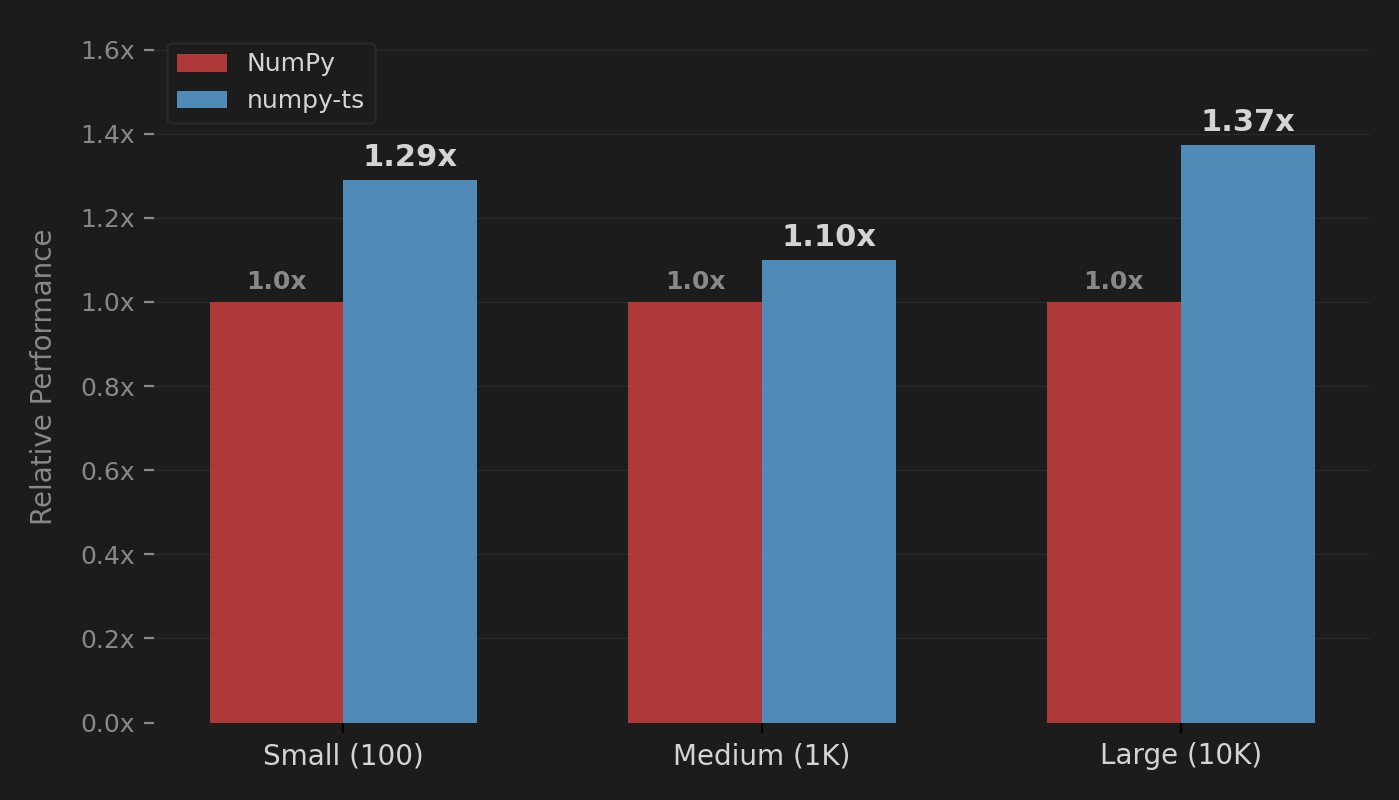
See the full breakdown of array size results on the size scaling page.
All Benchmarks
vs. NumPy (Native)
How does numpy-ts compare to NumPy running natively in Python with OpenBLAS?
vs. NumPy (Pyodide)
How does numpy-ts compare to NumPy running in WebAssembly via Pyodide?
Performance Scaling by Size
How does numpy-ts performance scale across small, medium, and large array sizes?
Node.js, Deno & Bun
How does numpy-ts perform across different JavaScript runtimes?