

Performance by Category
numpy-ts outperforms NumPy in most categories, led by gradient (4.63x), io (2.69x), and polynomials (2.35x). NumPy leads in bitwise, indexing, sorting, and random — all active areas of improvement.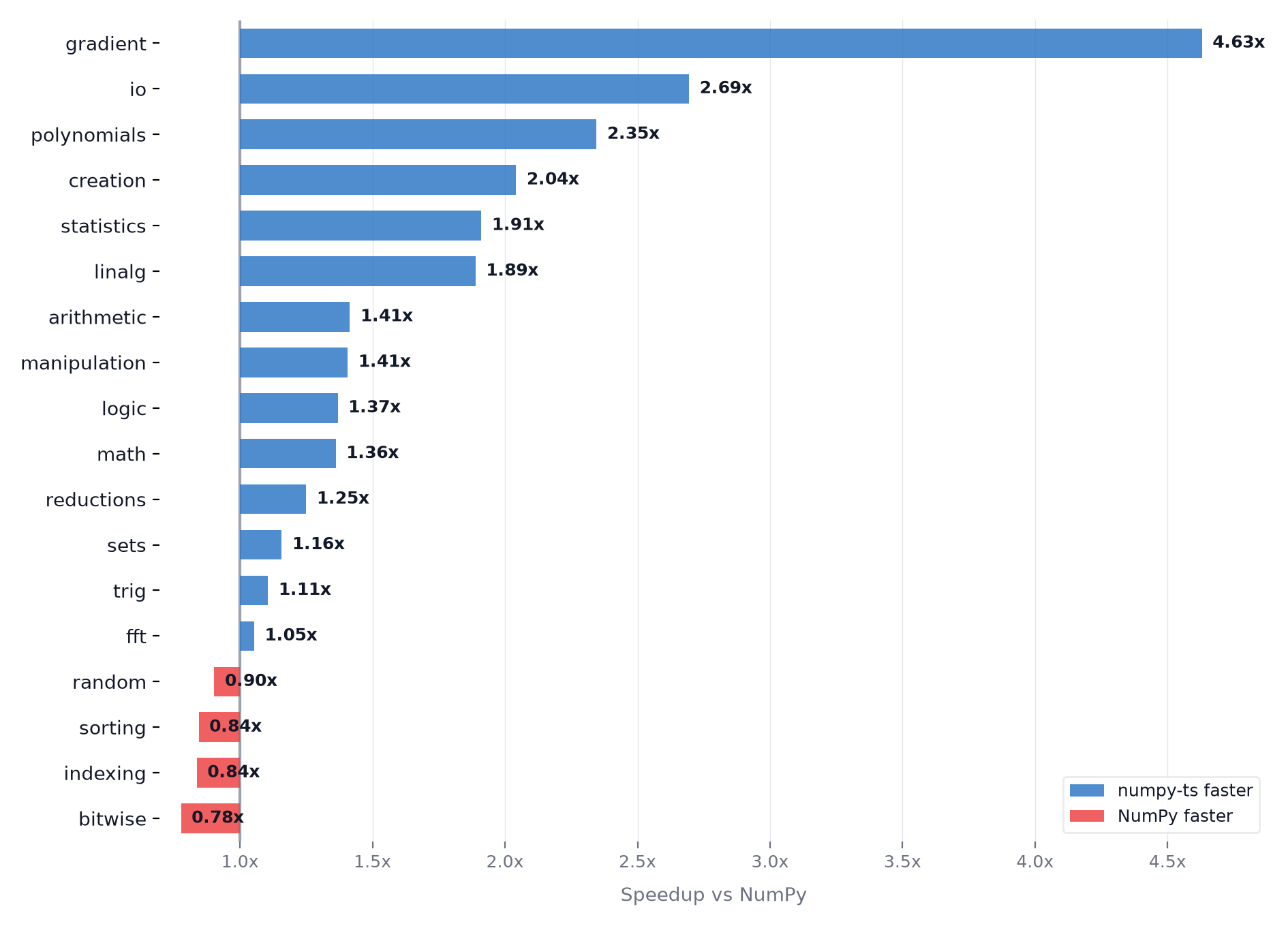
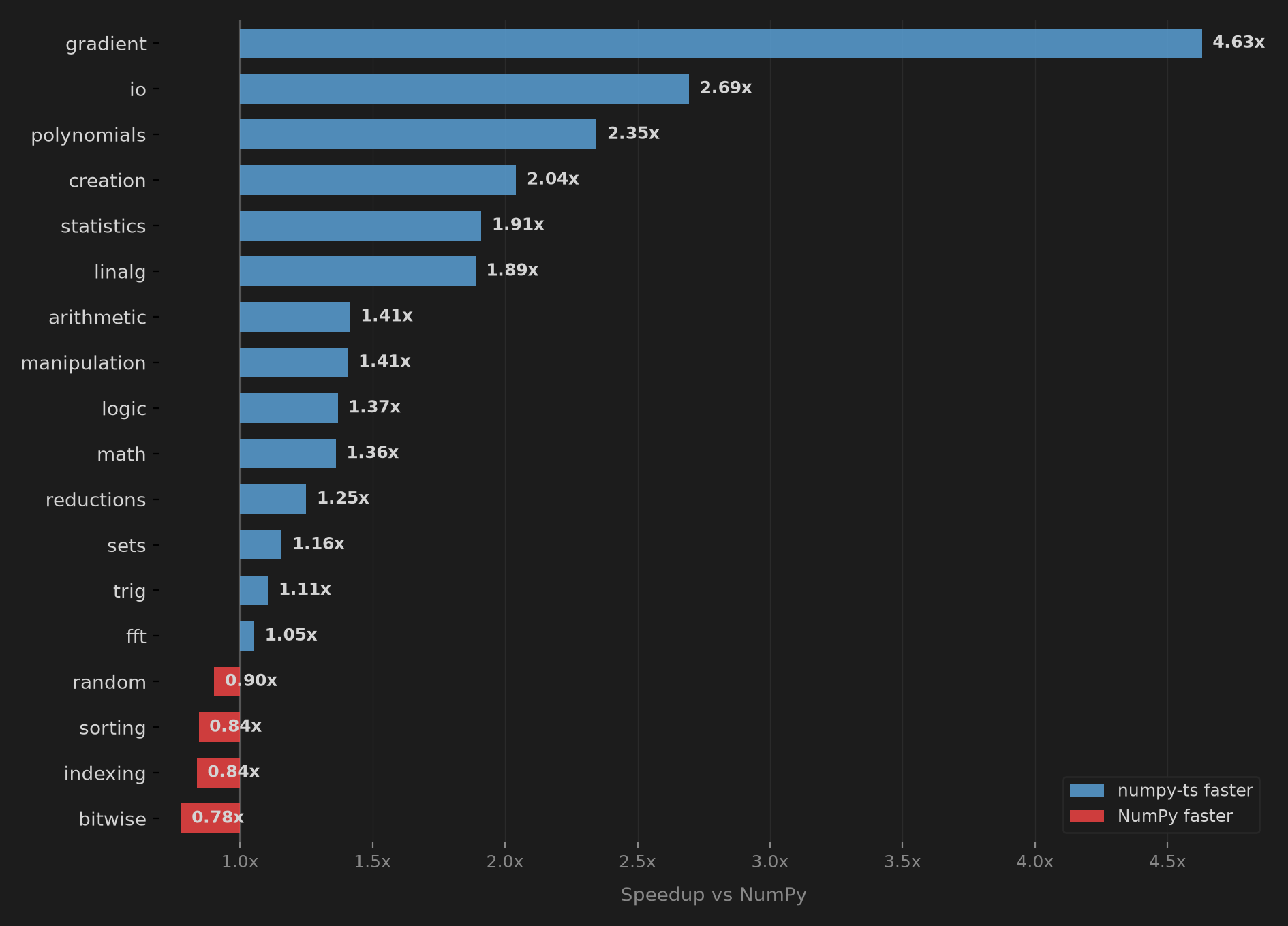
See the full breakdown of category results on the numpy-ts vs. NumPy page.
Performance by Data Type
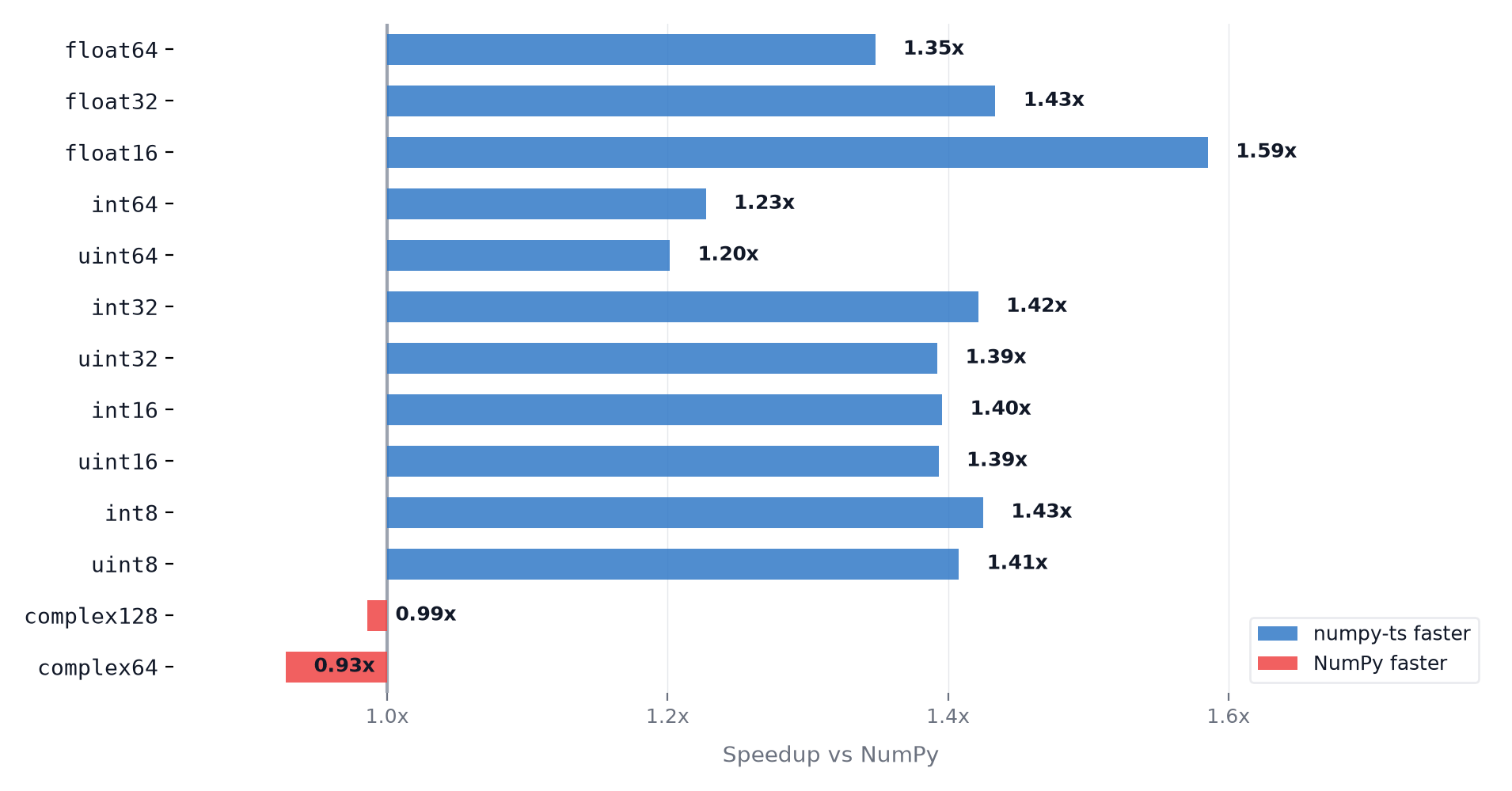
Smaller data types see the biggest gains — numpy-ts’s SIMD kernels process more elements per instruction, andfloat16 leads at 1.59x. Even float64 (NumPy’s home turf) is 1.35x faster. Complex types are the exception, where NumPy still leads.
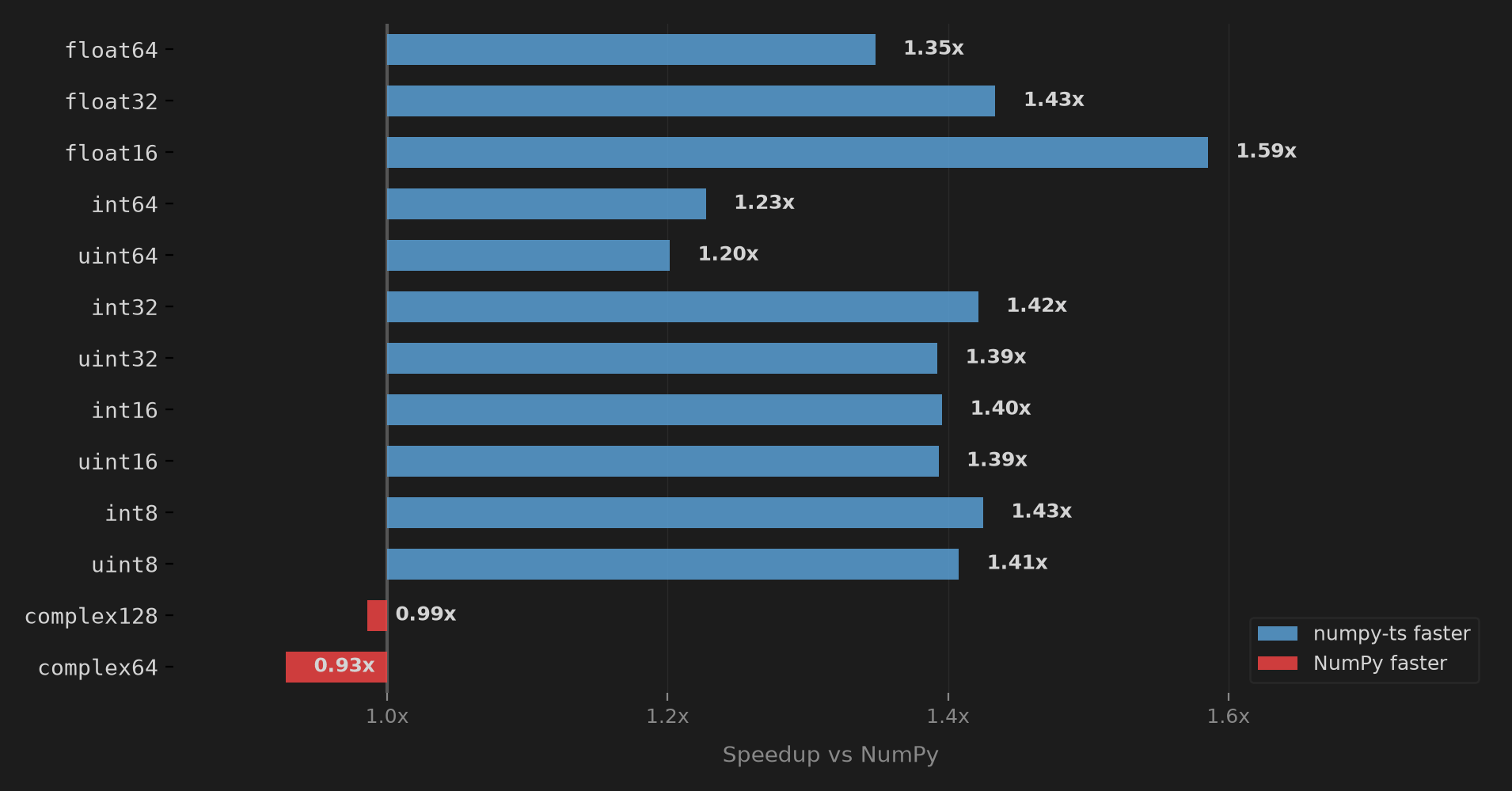
See the full breakdown of dtype results on the numpy-ts vs. NumPy page.
Performance by Array Size
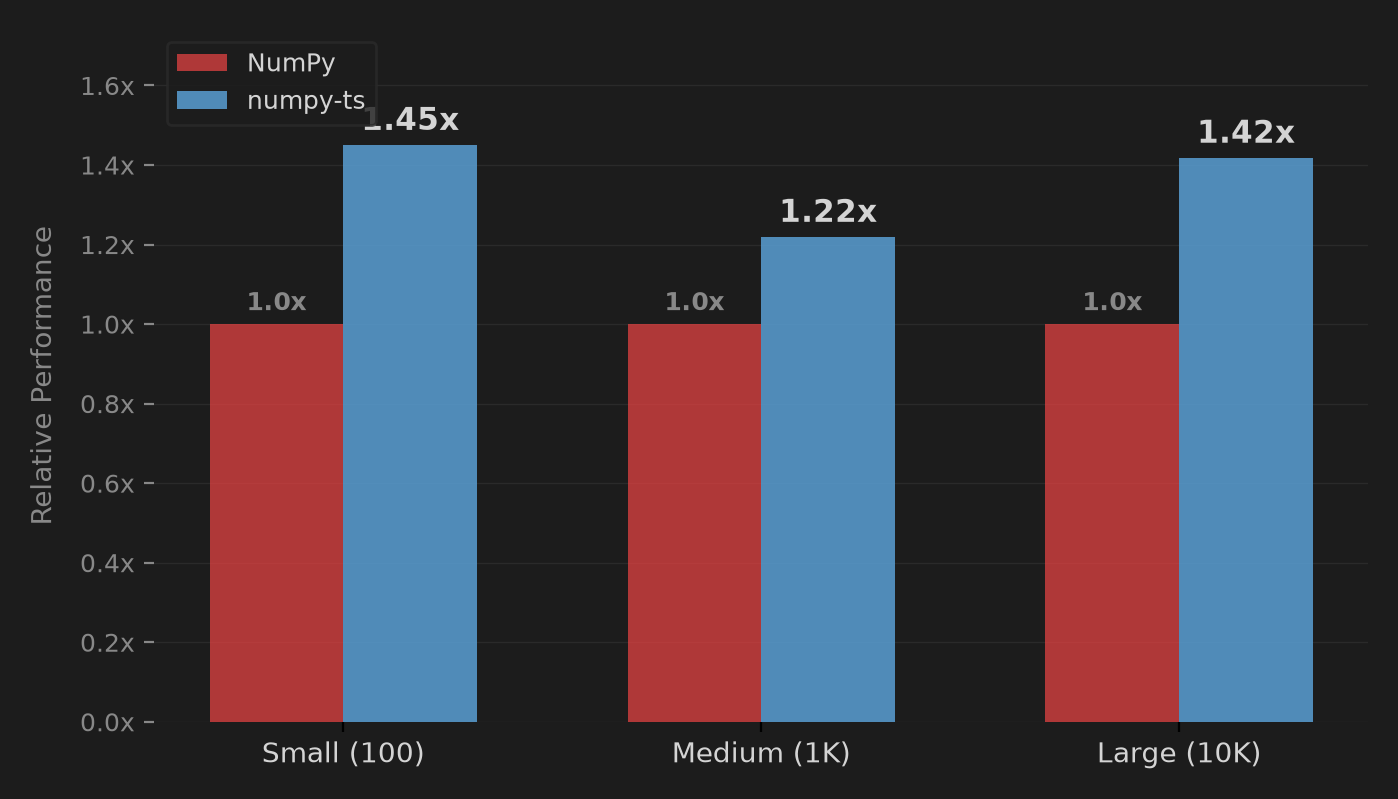
numpy-ts is faster than NumPy at every tested array scale — from small (100-element) arrays where low overhead matters (1.45x), to large (10K-element) arrays where SIMD throughput dominates (1.42x).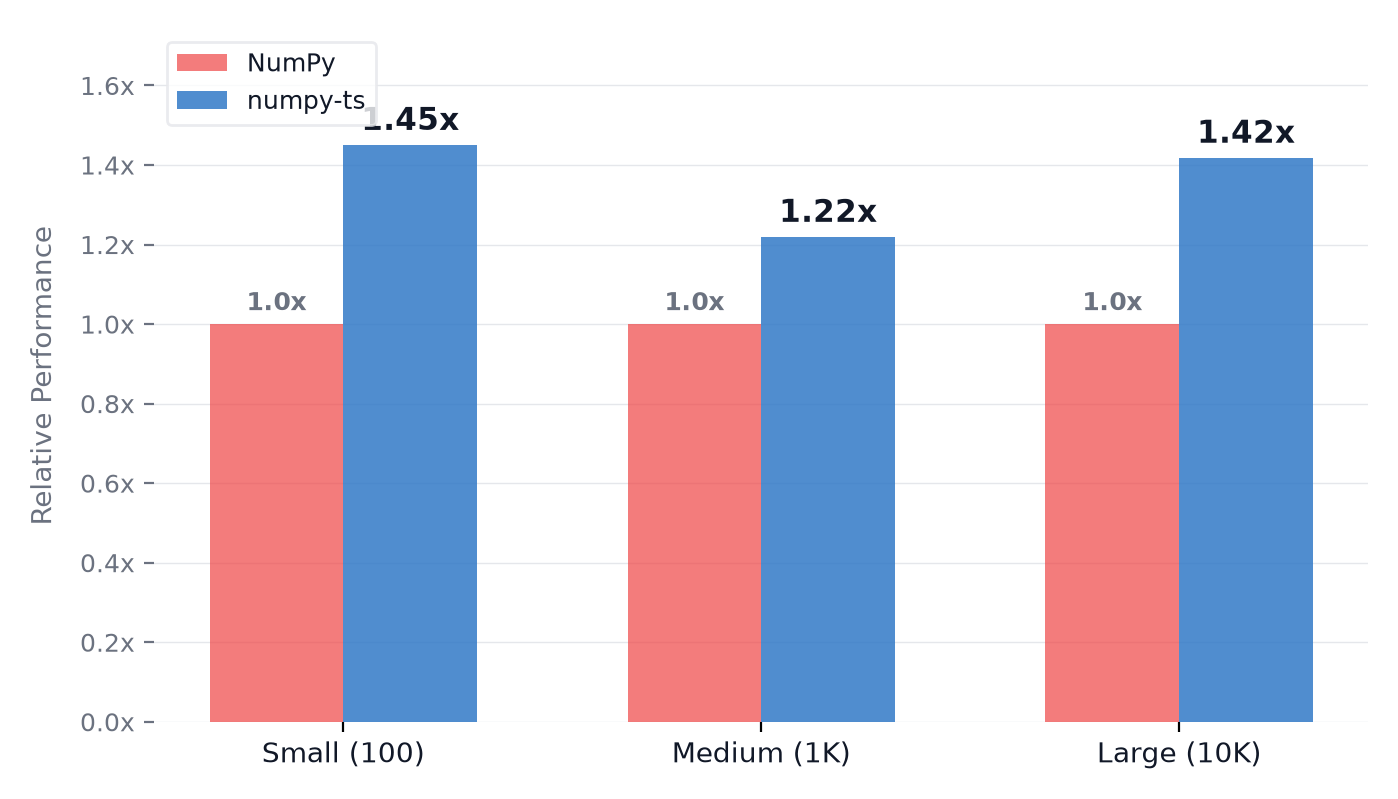
See the full breakdown of array size results on the size scaling page.
All Benchmarks
vs. NumPy (Native)
How does numpy-ts compare to NumPy running natively in Python with OpenBLAS?
vs. NumPy (Pyodide)
How does numpy-ts compare to NumPy running in WebAssembly via Pyodide?
Performance Scaling by Size
How does numpy-ts performance scale across small, medium, and large array sizes?
Node.js, Deno & Bun
How does numpy-ts perform across different JavaScript runtimes?